

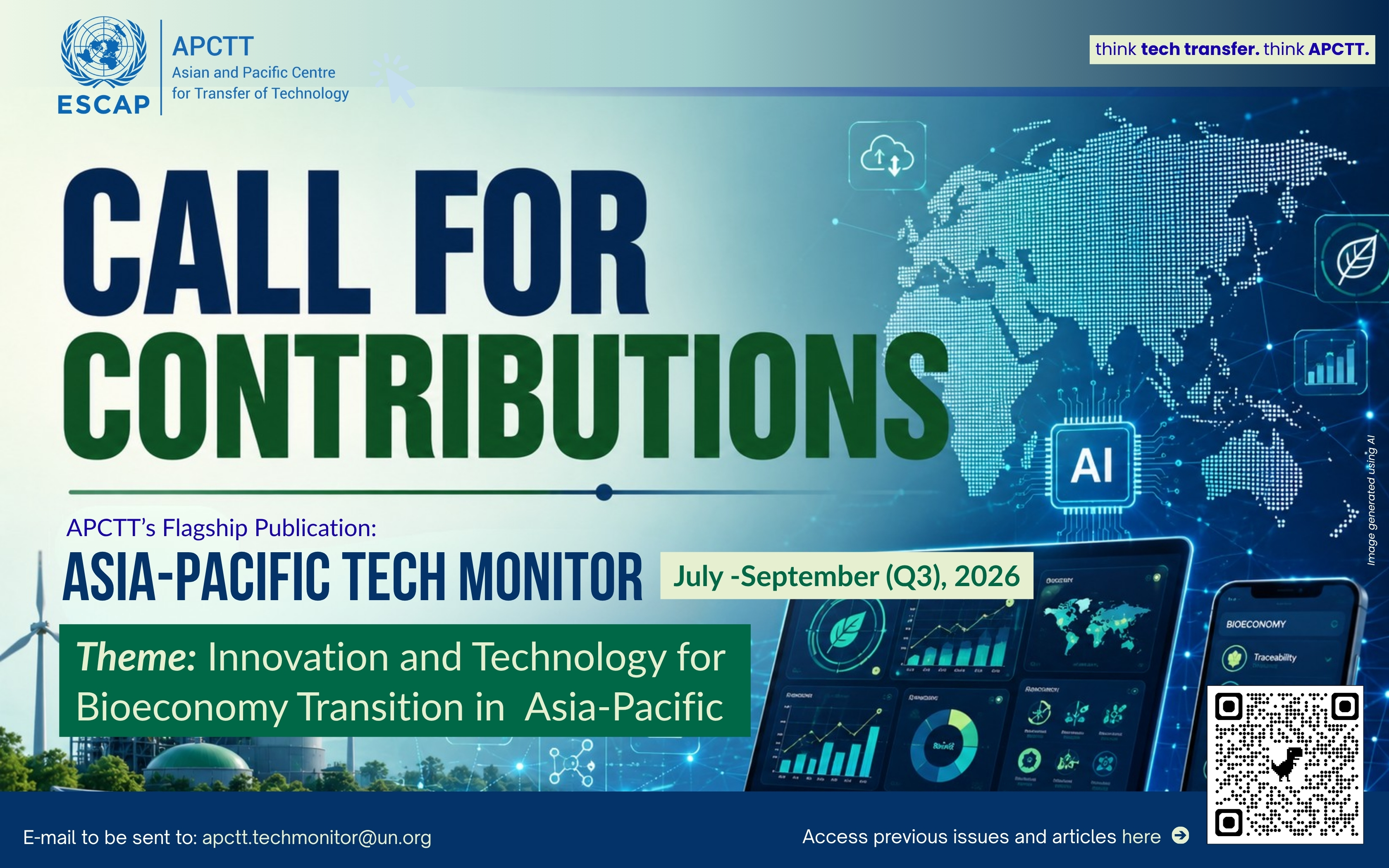
Asia-Pacific Tech Monitor · Call for Contributions
Innovation and Technology for Bioeconomy Transition in Asia-Pacific
(Q3) 2026
The theme
Building prosperity with biology—and staying within planetary boundaries
Bioeconomy refers to the use of biological resources, processes, and innovations to produce food, energy, materials, and services sustainably. It is rapidly emerging as one of the most transformative pathways for the Asia-Pacific region to address climate change, biodiversity loss, resource depletion, and persistent inequality.
Why now
The region is at a critical moment
From bioenergy and bioplastics to sustainable agriculture and waste-to-resource technologies, bio-based solutions are reshaping how economies grow while staying within planetary boundaries.
The resolution calls for integrating bioeconomy principles into national strategies, strengthening innovation and knowledge systems, mobilizing blended finance, and building regional capacities for a just and inclusive bioeconomy transition.
The Q3 2026 issue of the Asia-Pacific Tech Monitor will examine the role of science, innovation, and technology in advancing this transition across the region.
Suggested areas
What this issue will explore
Authors are invited to examine practical pathways from innovation to impact across bioeconomy systems.
01
Innovation to scale
Bio-based technological innovations and their pathways to commercialization and scale-up.
02
Digital and AI tools
Transparency, traceability and efficiency across bioeconomy value chains.
03
Financing models
Capital and blended finance for startups, MSMEs and community-based enterprises.
04
Capacity and transfer
Capacity-building priorities and technology transfer needs of member States.
05
Enabling policy
Policy frameworks that help sustainable bioeconomy transitions take root.
06
Regional cooperation
Mechanisms for knowledge exchange, shared learning and collective action.
Contribute
Share evidence, experience and ideas from across Asia-Pacific
Contributions drawing on country experiences, empirical research, and policy analysis from across the Asia-Pacific are welcome.