

Transfer of technology to the metaverse: Human factors and analogical thinking

Asia is one of the most vibrant socio-economic regions in the world. As the region ventures into possible open innovations for socio-economic-technological development, drivers and challenges may be similar though of different scales and orientations. This paper reviews design thinking, creativity-analogical thinking and selected case studies led by youth, guided by prior literature, in relation to the demographic dividend framework of the United Nations Economic and Social Commission for Asia and the Pacific (ESCAP) and the metaverse. Findings indicate that, first, despite variations in design centralities, abstracted key engagement design factors concur with the online-shopping factors of Venkatesh, Speier-Pero and Schuetz (2022), especially congruence, perceived value and enjoyment; second, design thinking via Maslow’s hierarchy of needs — when balancing and reviewing the SDGs, related metrics and innovation helices — sustains innovation; and third, capacity-building should work toward integrated, loosely coupled systems, allowing country- and region-specific benchmarks and choice, simplifying design and balancing across goals to meet country, community and individual needs while drawing on global frameworks, best practices, benchmarks and cross-disciplinary metrics.
1. Introduction
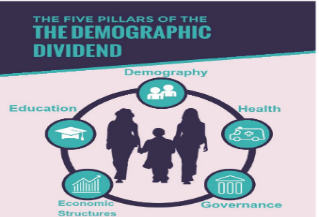
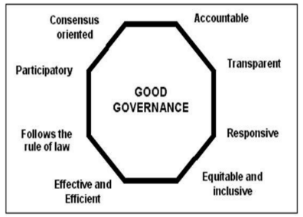
The Brundtland Report (Brundtland, 1987) provides the bases for three pillars of sustainability — environmental, social and economic — assisted and integrated by governance through systems and policies. The demographic dividend framework of the Economic and Social Commission for Asia and the Pacific (ESCAP) (figure 1) further promotes economic structures, social dimensions (environment, education, health) and good governance (figure 2) to facilitate demographic growth (ESCAP, 2022; Yap and ESCAP, 2009). Some exemplary integrated systems combining economic, education and governance dimensions in the Asia-Pacific region include Lazada, Taobao and Shopee.
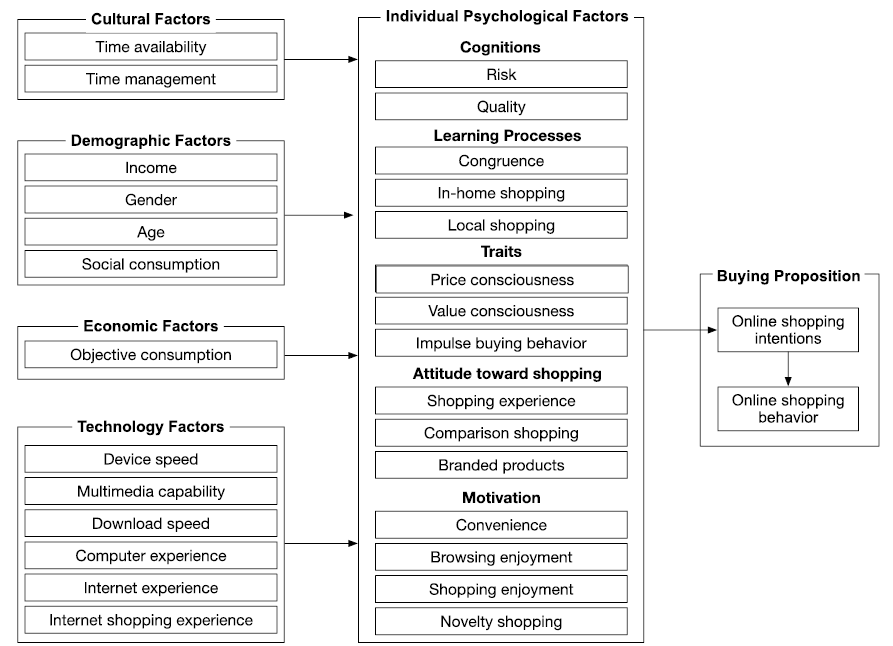
Furthermore, Venkatesh, Speier-Pero and Schuetz (2022) note that, amid intense competition, consumer adoption of technology for online shopping is not a given. Findings from their longitudinal study into how culture, demographics, economics, technology and personal psychology influence online shopping reveal congruence, impulse-buying behaviour, risk, local shopping, browsing enjoyment and shopping enjoyment as key drivers (figure 3). Among these, congruence is identified as the key factor influencing value consciousness, mediated by enjoyment (browsing and shopping) and moderated by risk tendencies, such as impulse-buying behaviour.
1.1 Problem statement
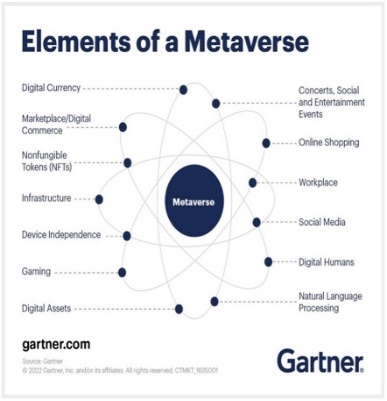
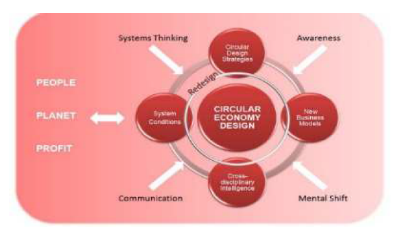
Gartner’s elements of the metaverse (figure 4) focus on augmented reality, virtual reality and mixed reality. It is, however, not clear whether integrated ecosystems lacking these elements can be considered a form of the metaverse and/or a type of demographic-dividend subsystem. This study hypothesizes that to be sustainable, especially for developing countries, the metaverse needs to include drivers for demographic dividend and good governance, and drivers for online shopping, parallel to each other — similar to intertwining chromosomes. This can lead to Medková and Fifield’s (2016) redesign and cross-disciplinary intelligence for the circular economy (figure 5) and “genetic” crossovers. Such transformation can open channels of possibilities and better-fit, sustainable partnerships, supply chains and ecosystems development and transfer of technology (Carayannis and Campbell, 2009).
1.2 Research questions
The research questions in this review and opinion paper are:
- RQ1. Can design thinking via Maslowian themes map to ESCAP’s demographic dividend and good governance?
- RQ2. Can modular integrated systems learn from analogical, model-based thinking toward cross-disciplinary intelligence?
- RQ3. Can design thinking via the online-shopping factors of Venkatesh, Speier-Pero and Schuetz (2022) — especially congruence, perceived value and enjoyment — map to ESCAP’s demographic dividend and good governance?
1.3 Objectives
Emulating the United Nations, Malaysia, as the chair of the Association of Southeast Asian Nations (ASEAN), with the theme “Our People, Our Community, Our Vision”, introduced knowledge transfers via the Multimedia Super Corridor in 1997, and sustainability policies, identifying and promoting best practices and capacity-building or transfer in 2009 with the Ministry of Energy, Green Technology and Water (APTM, 2015). Continuing from prior studies on reference-modelling best practices (Lee, Koper, Kommers and Hedberg, 2008), Lee and Kolodner (2011) have proposed object-oriented strategies and tactics to enable reference modelling of sustainable development between and among countries.
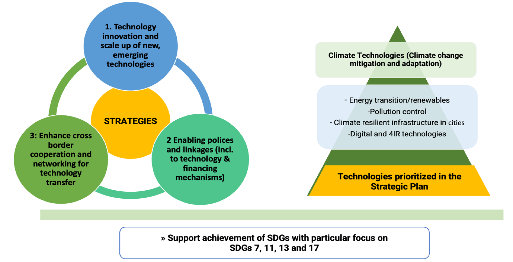
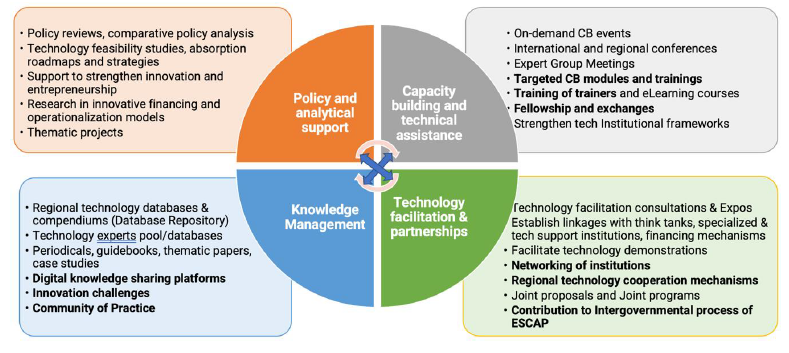
These concur with the APCTT 2023–2027 Strategic Plan framework (figure 6) (APCTT, 2023). Change-management strategies — such as promoting cross-border cooperation, networking, innovation, technology transfer and scaling-up of emerging technologies through policies and financial institutions (figure 6 left) and implementation modalities (figure 7) — have aided APCTT’s development of priority technologies (figure 6 right). Digital and Fourth Industrial Revolution technologies enable climate-resilient infrastructure. Infrastructure, in turn, enables control and transformation/renewal. Over time, mitigation and adaptation strategies mature.
For emerging and developing countries, the pyramid may be better understood as a matrix, since resources are not always available or adequate, and development is often pursued across multiple SDGs simultaneously (Lee, 2025). Hence, focusing on environmental, social and governance (ESG) metrics may be more practical. But if the metrics are too complex, strategies may be difficult to adopt, achieve or evaluate. In line with the self-determination-theory constructs of autonomy, competency and relatedness (Ryan and Deci, 2000) and the Institute of Electrical and Electronics Engineers’ (IEEE) tenets of lifelong learning, Lee (2025) has proposed simplification, loosely coupled partnerships based on the well-known Capability Maturity Model, and freedom to choose, as capabilities/capacities via talent, infrastructures and supply chains grow and as standards and best practices are regionally and nationally localized.
Subsequently, this paper discusses some youth-led innovations guided by prior literature and adaptations, with interconnected ecosystems as the primary technology-design factor as the region ventures into the metaverse. These innovations map — to a humble extent — to ESCAP’s demographic dividend, where economic structures, social dimensions (environment, education, health) and governance facilitate demographic growth.
2. Methodology
This study reviews five undergraduate research projects on interlinked and integrated systems undertaken at two universities in Malaysia. Foundational to these studies are:
- Design challenges in which student-designers hypothesize and validate what and how they want their future to be like, in line with self-determination theory’s constructs of autonomy, competency and relatedness (Ryan and Deci, 2000);
- Design thinking and computational thinking grounded in user needs (Dym and others, 2005), with examples of such needs drawn from Maslow’s (1943) hierarchy of needs;
- Analogical thinking (Goel, 1997) and the Learning Sciences’ problem-based learning combined with case-based reasoning (Kolodner and others, 2003), where problem-solutions are retrieved, reused, revised and retained based on multiple facets, criteria or attributes (the simplest and most common being the table of comparison as a summary of reviewed literature);
- Use of other disciplines to enrich design possibilities through crossovers and mutations based on criteria- or attribute-driven pivot points;
- Modularity and loose coupling to enable efficient and effective management and refinements.
3. Findings and discussion
3.1 RQ1: design thinking via Maslowian themes and ESCAP’s demographic dividend
Maslow’s hierarchy of needs maps well to ESCAP’s demographic-dividend dimensions. Table 1 illustrates this mapping across environmental, social and economic sustainability and the Sustainable Development Goals (SDGs).
| Sustainability dimension (Maslowian needs) | Focus area | Related SDGs | Cross-cutting goal |
|---|---|---|---|
| Environmental sustainability (physiological needs) | Reducing climate-changing emissions; expanding renewable energy; protecting biodiversity, ecosystems and living species; circular economy and waste reduction; making agriculture and food supply chains more sustainable | SDG 6 clean water and sanitation; SDG 7 affordable and clean energy; SDG 13 climate action; SDG 14 life below water; SDG 15 life on land | SDG 17 partnership for the goals (individual, social, economic, political, environmental) |
| Social sustainability (physiological, safety and security, love and belonging, self-esteem, self-actualization) | Equity and human rights | SDG 1 no poverty; SDG 2 zero hunger; SDG 5 gender equality; SDG 10 reduced inequalities; SDG 16 peace, justice and strong institutions | |
| Access to health care, quality education | SDG 3 good health and well-being; SDG 4 quality education | ||
| Decent employment | SDG 8 decent work and economic growth | ||
| Economic sustainability (safety and security, love and belonging, self-esteem, self-actualization) | Responsible resource management | SDG 9 industry, innovation and infrastructure; SDG 11 sustainable cities and communities; SDG 12 responsible consumption and production | |
| Efficiency and innovation capacity of economic systems and businesses; financial stability at the macroeconomic level | — |
3.2 Case studies
3.2.1 RQ2: modular integrated systems and analogical, model-based thinking
Problem-solving through case-based reasoning (Kolodner and others, 2003) and Goel’s (1997) computational analogical creativity recommends substitution and refactoring. Analogical, cross-disciplinary intelligence based on metadata and meta-models is likewise feasible, given desired frameworks, goals, criteria and trade-offs. For example, the same strategic workflow used to recommend items in e-learning (Lee, 2008) and e-commerce (Lim and Lee, 2008) depends on the user’s preferences, past browsing history and past purchase metadata, and best/top-n matches with the database’s resource or product metadata. Pivots and cross-matches are also based on matching metadata.
3.2.2 RQ2 and RQ3: design thinking, congruence and value
For the metaverse, the sustainability of, and for, socio-economic-technological development among interconnected systems is a multifaceted, criteria-based experimental playground. With diverse selection of within- and cross-disciplinary frameworks and metrics, richer and more meaningful outcomes may result. An example is the Sustainability Awareness Framework of Becker and others (2016), which covers five dimensions: individual, social, economic, technical and environmental.
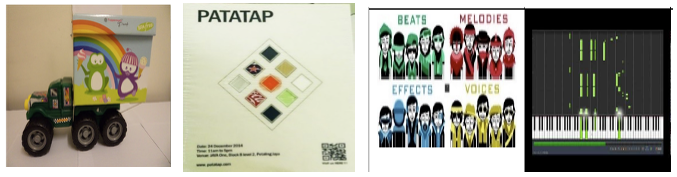
There is a need to simplify and integrate, as users are often overwhelmed with too many applications. As shown in Lee (2025), Asian countries that focus on people — on wellness or education — develop faster, while developed countries focus more on energy as their systems are more advanced, stable and established. Some humble beginnings with slightly different centralities in design include Lee and Wong’s (2018; 2021) QR-linked systems focusing on reusable material craft (figure 8) for pre-school children, and music for mental health (Patatap). Continuing from Lee and Wong’s (2018) gamified learning for smart cities, Phang and Lee (2025) have designed an integrated system focusing on climate change (figure 9a); Chong and Lee (2026) have designed an integrated system focusing on the circular economy; Lee and Ding (2025) have designed an integrated system focusing on mental health (figure 9b); and Look and Lee (2026) have integrated wellness with a positive-psychology chatbot (figure 9c).
Integrating mini-games and gamification into e-commerce on climate change, the mobile application of Phang and Lee (2025) aims to persuade the individual, directly and indirectly, to reduce his or her carbon footprint by transforming a simple calculator into a visualized carbon-footprint report. Alpha-beta user testing based on Technology Acceptance Models 1–3 confirms that the personal carbon-footprint report has the greatest impact, followed by the individual’s willingness to act on climate change, alternatives for mitigating climate change, and cause-and-effect purchase decisions in the “Shop” feature.
Chong and Lee’s (2026) LoopCart integrates circular-economy principles to promote sustainable consumption. Key features aligned with the 6R framework are best-value comparison, personalized product filtering, repair services, daily quiz, Green Coin reward system, chatbot, and reflective sustainability analytics and reports. Alpha-beta findings via the User Experience Questionnaire and the Technology Acceptance Models 1–3 confirm that value via personalization, and feature-based learning from multiple channels, can lead to more meaningful, responsible consumption.
Lee and Ding’s (2025) Mindful Quest incorporates reflective self-care activities, adventure and time-management activities, outward and societal activities, and an enrichment self-paced educational library. Alpha-beta user-testing findings reveal that congruence is reflected in value (and price) consciousness, technological factors and browsing enjoyment. In terms of user acceptance, clarity and ease of use averaged 89 per cent, usefulness of mental-health and well-being activities 88 per cent, and productivity 91 per cent. The most important strengths are gamification (47 per cent) and enjoyment from mixed content — for example, education and personal growth combined with entertainment, work with self-care, productivity with mental-health and well-being goals, and self-care with rewards (17 per cent).
Aimed at offering personalized mental-health support, Look and Lee’s (2026) YouMii, a positive-psychology, Gemini-based mobile-app AI companion, integrates mood-based and behavioural tracking and recommends proactive self-care activities and context-aware conversational interactions and interventions through contextual reasoning.
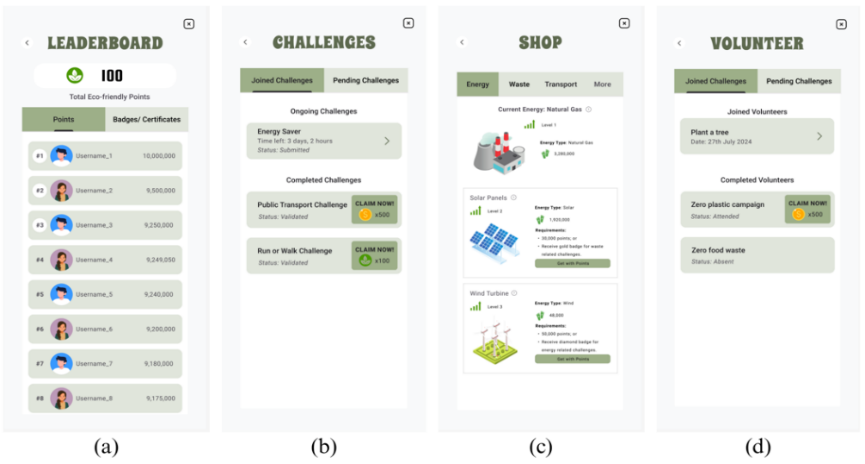
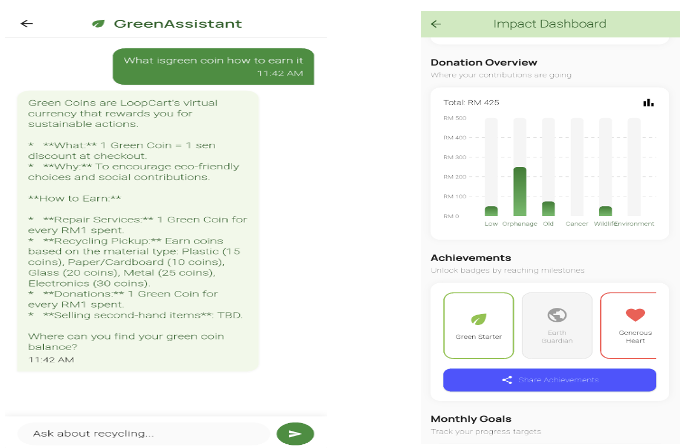
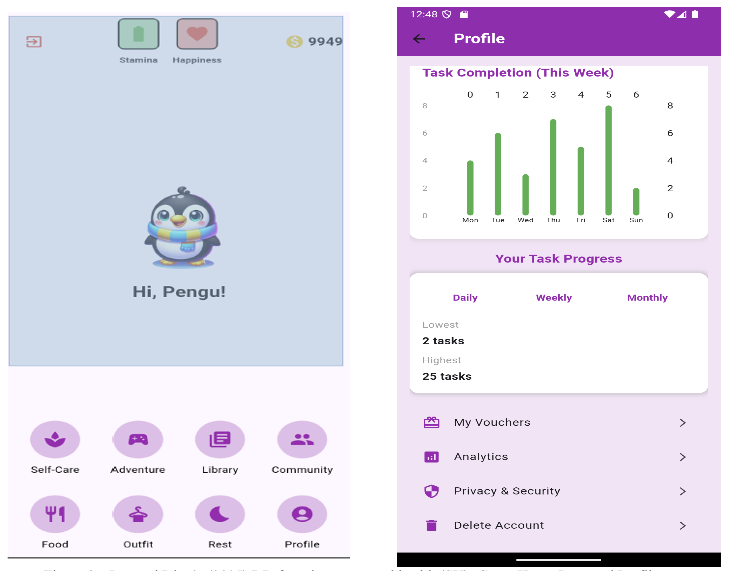
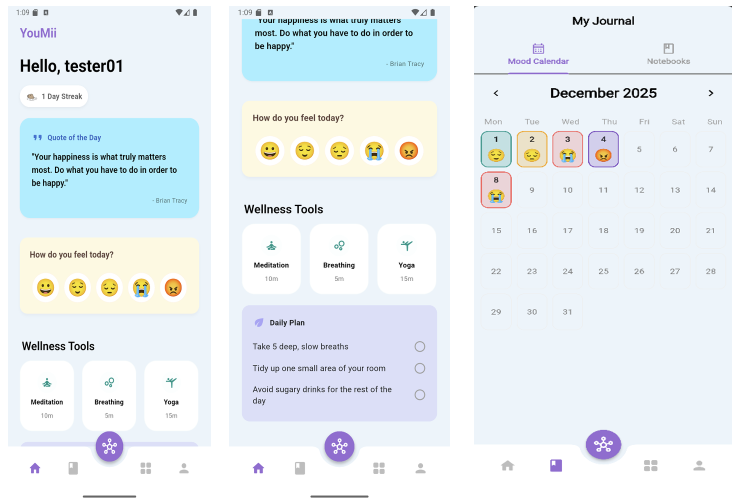
Abstracted findings from these studies confirm that design thinking maps well with the online-shopping factors of Venkatesh and others (2022), especially congruence, perceived value and enjoyment, and with ESCAP’s demographic dividend and good governance.
3.2.3 RQ2 (continued): cross-disciplinary intelligence and ontology
Gentner and Forbus’s (2025) review of four decades of symbiotic interactions between psychology and artificial intelligence indicates that structure-mapping engine simulations, for example via CogSketch and Companion, can be operationalized across disciplines. As such, case-based reasoning and analogical reasoning complement matching objectives with metadata and identify fit based on the degree of similarity.
Furthermore, with ontology, if the problem in one discipline is similar to that of another discipline — for example, encouraging more active participation in e-learning and e-commerce — then similar but tweaked or extended variables can be included in the if-then rules and business logic when applying rewards (for example, gamification). In past and current research, there is no penalty, only rewards. Hence, it is not reinforcement learning but refinement and the sustaining of motivation and interest (Lee and Wong, 2018).
At a higher level of the Semantic Web, ontology reduces the cold-start problem (Sasena, Papalambros and Goovaerts, 2002; Sigurdarson, Papalambros and Eifler, 2023). User-item collaborative filtering subsequently depends on semantic relationships. To enhance learning of non-linear relationships during user-item collaborative filtering, and further reduce the cold-start or data-scarcity problem in new contexts, Ong, Ng and Haw (2021) have incorporated deep neural networks to complement matrix factorization. In initial tests, the consequent neural matrix factorization (NeuMF++) or neural collaborative filtering improves the identification of matching latent matrices. Intelligent knowledge-project-management optimization approaches, such as that of Li and others (2020), can help to reduce global-local regret and optimize user satisfaction. Rewriting the ontology, for example as proposed by Xu and Ye (2020), can also build on this base.
4. Implications
Complementing the Web-engineering technological solution above is simplification through data-driven choice. In Lee’s (2025) review and analysis of United Nations SDG country performances across regions, it is found that there are differences in strengths across regions. The more advanced countries focus more on energy, while less developed or developing countries focus on basic and progressive needs. Furthermore, countries that frame policy design in relation to Maslow’s hierarchy of needs (the originator of design thinking) exhibit commendable progress: with improvements in SDG 4 (quality education), SDGs 1 (no poverty), 2 (zero hunger) and 3 (good health and well-being) also improve, though at different rates. Subsequently, SDG 11 (sustainable cities and communities) improves.
Hence, the goal is not merely to meet metrics but to improve quality of life or progress along Maslow’s hierarchy of needs. More importantly, the focus of discussion should recognize differences among regions and moderate, or allow, contextual choices while benchmarking against cross-regional goals, characteristics and impacts. Capacity-building should work toward integrated, loosely coupled systems in order to simplify design and balance the trade-offs across the country-specific goals chosen, and their importance to country, community and individual needs. Otherwise, countries and individuals may be overwhelmed. Can there be integrated collective metrics and aggregation for the Asia-Pacific region, toward win-win collaborative cross-selling (Rudas, Pap and Fodor, 2013)?
5. Conclusion
Ultimately, the quality of outcomes depends on how well the problem is modelled in terms of the real-world individual, socio-technical, political and technological dimensions. Sometimes, the weighting of importance among these dimensions differs, so the outcomes also differ. As such, the value of developing demographic-dividend-oriented systems thinking is critical. Aggregation and meta-modelling, for example by the United Nations and ESCAP, help to develop better transfers of knowledge and best practices in technology. As with model-driven architectures, organizations and countries can select which components or technology from the global or Asia-Pacific knowledge repository better suit them, for further localization and refinement.
Freedom to develop different centralities of design, of relevance to the designers (youth) of diverse backgrounds, influences the quality and type of design outcomes. Nevertheless, relevance is primary. To refine, some fractal learning will be required, as there must be a degree of monotonicity (Sigurdarson, Papalambros and Eifler, 2023) to keep the design’s fundamentals stable and consistent over time. Computationally, this implies identifying significant features or aspects and representing these via matrix factorization, toward systemic dynamic micro-macro analogies, adaptivity, balance and redesign in the future. Most importantly, systemic sustainable design for augmented or lean systems should consider ESCAP’s demographic dividend and good governance.
The contents of this paper reflect the author’s perspectives and do not necessarily reflect those of her current institution, as the journey stretches more than 20 years. The author wishes to thank the United Nations, ESCAP and APCTT for their inspiring and rigorous work for the greater good, and Dr. Mayank Raj Kumar for the opportunity to write therein. She also acknowledges Prof. Hean-Teik Chuah and Prof. Hong-Tat Ewe of Multimedia University’s Faculty of Information Technology and Universiti Tunku Abdul Rahman’s (UTAR) Faculty of Creative Industries; Prof. Yashwant Prasad Singh; Prof. J. L. Kolodner and Prof. A. K. Goel (Fulbright Visiting Scholar Fellowship at Georgia Tech, 2009); Dr. Kuok-Shoong Daniel Wong (Daniel Wireless Software, Singapore) and Stanford’s d.school; Prof. Bo Jiang (China) for work on Scratch fractal learning; Sunway University, ex-UTAR and ex-Sunway University undergraduate students whose final assignments and capstone projects are featured in this paper; and the Fulbright Visiting Scholar Fellowship, which partially funded these projects and publications.
Technology offer
Interested in this technology?
Request further information or explore potential cooperation with the technology provider.
Technology request
Can you help meet this technology need?
Share a relevant technology, expertise or partnership opportunity with APCTT.